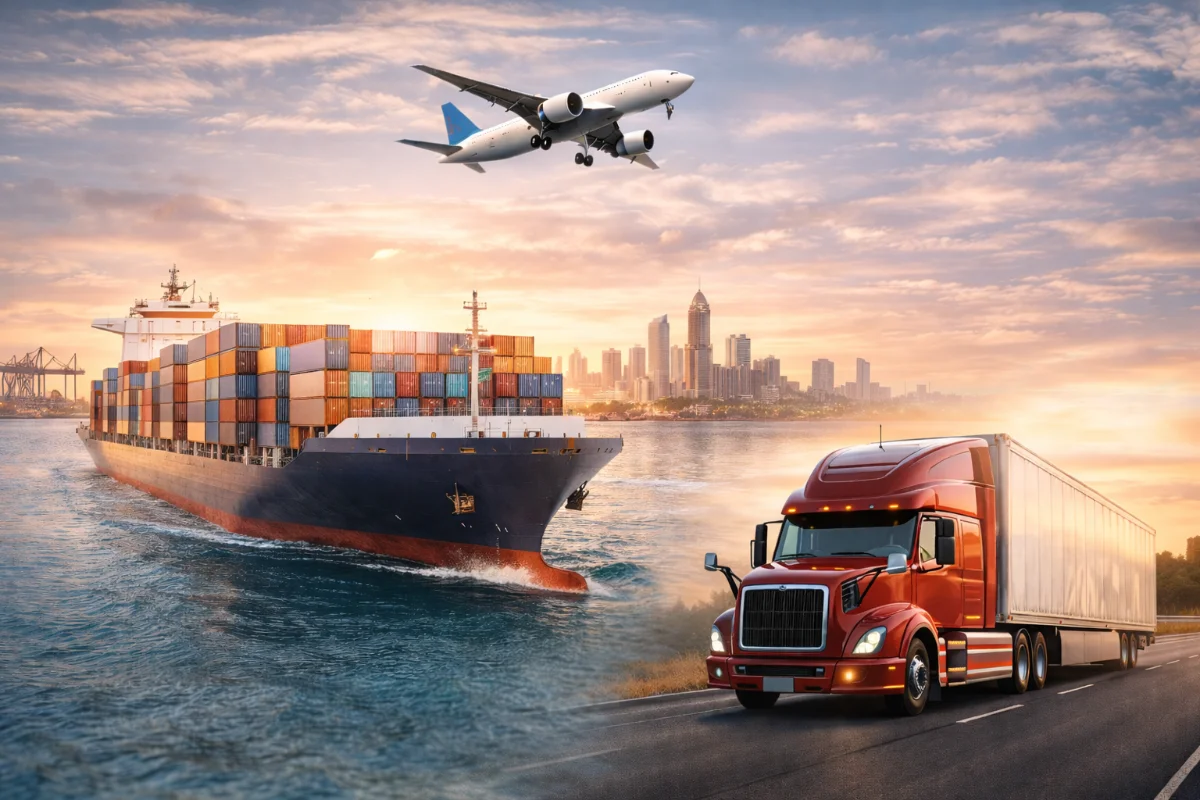
International cargo in Costa Rica: when ocean, air, or land transportation is right for your company
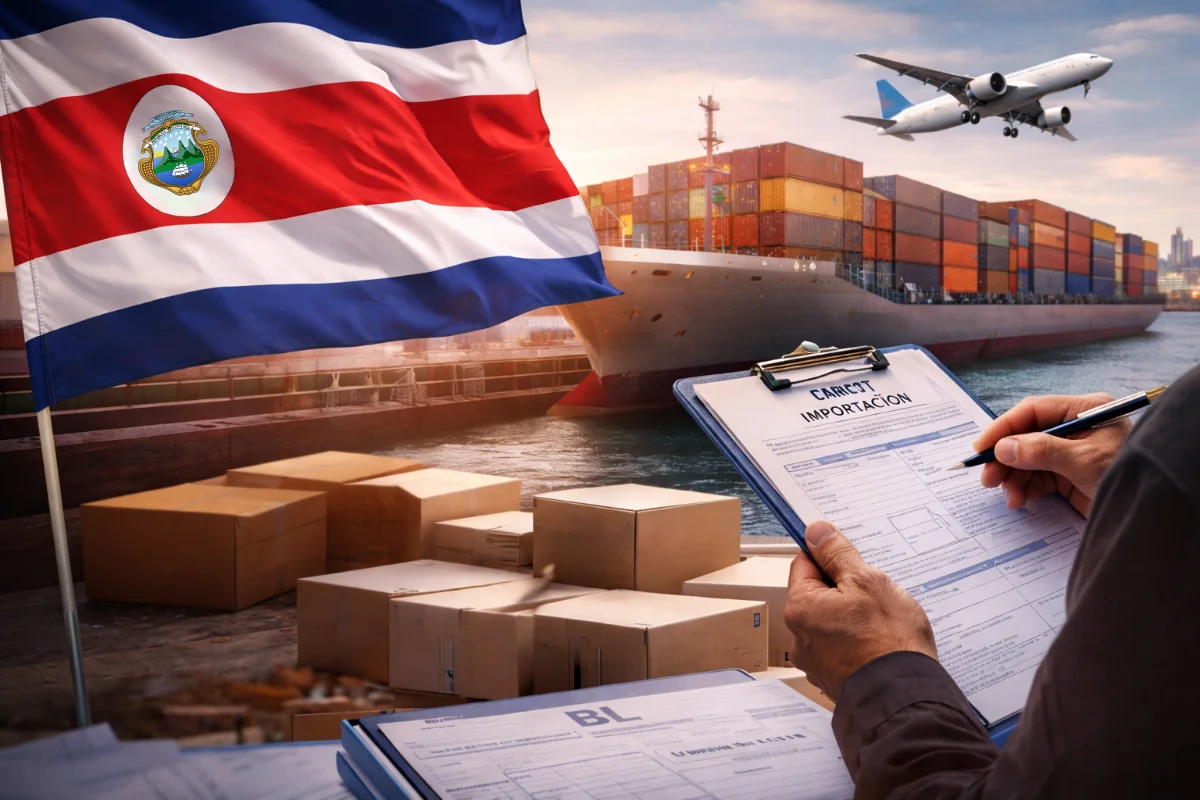
International cargo in Costa Rica is not simply about hiring freight. It is deciding how the goods will move, how much control the company will have over the route, what level of risk it can assume, and what impact that decision will have on costs, times, inventory, and customer service. Choosing the right mode of transportation can improve the entire operation. Choosing it poorly can generate delays, unnecessary expenses, and promises that are difficult to keep.
Many companies make this decision automatically. If the cargo comes from far away, they think of ocean freight. If it is urgent, they think of air freight. If the destination is nearby, they think of land transportation. Although that logic has some truth to it, the reality is more nuanced. The right mode depends on the type of product, volume, purchase frequency, value of the goods, negotiated Incoterm, and the exact point where the company needs to control the operation.
That is why transportation should be analyzed as part of a comprehensive logistics strategy. Not as an isolated order at the end of the purchase. In a logistics company in Costa Rica, the analysis of the transportation mode connects with documentation, customs, costs, coverage, and final delivery. That is the approach that makes it possible to compare alternatives with judgment and not just intuition.
In this guide, you will find a practical comparison between ocean, air, and land transportation, along with key questions to choose the most convenient mode for your company.
What it really means to choose the right mode of transportation
When a company selects a mode of transportation, it is actually making several decisions at the same time:
- how much it will pay to move the cargo
- how long it will take to have the goods available
- how much operational risk it will assume
- how much visibility it will have along the route
- how flexible its supply chain will be
For example, ocean cargo may offer a better cost per unit, but require more careful inventory planning. Air cargo can solve urgent needs, but make the product more expensive if used without judgment. Well-coordinated land support can prevent breaks between port, warehouse, and final destination, while a poorly synchronized leg can ruin the work of the entire shipment.
Choosing well is, in essence, aligning logistics with the logic of the business.
When ocean transportation is convenient
Ocean transportation is usually the best option when the main priority is moving larger volume with a more efficient cost per unit. It is especially useful for planned imports, heavy cargo, products that do not require immediate replenishment, and operations that can be scheduled in advance.
In simple terms, ocean freight is convenient when:
- the company handles high volumes
- the product can tolerate longer transit times
- freight cost has a major influence on margin
- the goal is to consolidate purchases or supply
- there is reasonable inventory planning
Within ocean freight, the company will normally evaluate two common operational routes: FCL and LCL. In an FCL shipment, the container is used entirely for one client’s cargo. In an LCL shipment, the goods share space with other cargo. The first usually provides more control and less handling; the second can be useful when the volume does not justify a full container.
An important advantage of ocean transportation is its scalability. If the company already understands its demand, it can schedule purchases more efficiently and improve the total logistics cost. However, its main condition is planning. Whoever buys late, orders late, and books late will almost always experience ocean freight as a problem, when in reality the problem started earlier.
When air transportation is convenient
Air transportation is best used when time has more value than freight savings. By definition, it is not a service only for urgent cargo. It can also be useful for high-value goods, commercial samples, critical spare parts, sensitive equipment, or products whose sale depends on fast arrival.
It is advisable to consider air cargo when:
- a delay would cause lost sales
- the company needs to replenish inventory quickly
- the goods are valuable and relatively compact
- the volume is small or medium
- speed is more important than cost per kilo
The most common mistake with air transportation is using it as a permanent solution for planning problems. A strategic air shipment can be a good decision. Constant dependence on air freight, caused by late purchases or poorly calculated inventory, usually becomes a drain on profitability.
That is why air transportation should be analyzed not only for its speed, but also for its role within the business. If it saves a season, protects a key client, or prevents a critical stockout, it may be justified. If it becomes routine due to internal disorder, it is probably a sign of a bigger problem.
When land transportation is convenient
Land transportation plays two different roles. The first is the most visible: moving goods between points within the country or between nearby territories. The second, often underestimated, is connecting the rest of the chain: pickup at port or airport, transfer to warehouse, consolidated deliveries, or completion of the business last mile.
It is convenient to rely on land transportation when:
- the goods must move between local nodes
- the operation requires door-to-door delivery
- continuity is needed between customs, warehouse, and client
- local distribution influences the final experience
- operational flexibility is required in routes or deliveries
In many operations, the land leg is the point where it is defined whether the shipment truly flowed. An import may arrive in the country on time, but be poorly resolved if the final delivery is improvised. That is why, in mature logistics, land transportation is not a “we will see later”. It is part of the operation design.
The factor that almost always decides: urgency versus cost
If the choice of transportation mode had to be summarized in a single tension, it would be this: urgency versus cost. Ocean freight usually wins in volume efficiency. Air freight wins in speed. Land transportation provides continuity and reach.
But that comparison is only useful if read in light of the business. For example:
- if the company has safety stock, it may favor ocean freight
- if it cannot run out of stock, it may need a mix of ocean + air
- if the product is bulky and has a lower margin, air freight may become unfeasible
- if the client requires very short delivery times, local logistics gains more weight
In other words, there is no “better” mode in the abstract. There is a more suitable mode for each scenario.
How Incoterms® influence the choice of transportation
Many transportation decisions are distorted because the company compares quotes without first reviewing the negotiated Incoterm. The Incoterms® rules, officially published by the ICC, define responsibilities, risks, and certain costs between buyer and seller. If the company does not understand that basis, it may believe it controls part of the process that is actually in the supplier’s hands, or the other way around.
For example, a buyer may think the freight is handled by the supplier, but discover too late that the coverage is not sufficient or that route visibility is limited. Another may accept a term that seems convenient at first, but removes the ability to choose the route, consolidator, or even the level of tracking.
That is why, before choosing between ocean, air, or land transportation, it is advisable to review which rules are being used to negotiate the purchase. Transportation is not chosen in a vacuum. It is chosen within a commercial structure.
What information a company needs to quote correctly
A transportation quote is only as good as the information it receives. If the company wants to seriously compare options, it should provide at least these details:
- clear product description
- number of packages
- gross weight and, if applicable, volume
- approximate dimensions
- origin and destination
- estimated availability date
- negotiated Incoterm
- whether the cargo requires insurance or special handling
With these elements, the comparison stops being superficial. The question is no longer only “how much does it cost”, but “what does it include”, “what timelines does it handle”, “what risks does it have”, and “what service best solves this operation”.
Common mistakes when choosing the mode of transportation
There are several mistakes that are repeated in companies that import or export frequently:
Choosing only by price
The cheapest mode at the beginning will not always be the most economical at the end. If it causes inventory shortages, late penalties, or failed deliveries, the supposed savings disappear.
Choosing only by urgency
When a company gets used to solving everything with air cargo, the real problem is usually in purchase planning.
Not integrating customs and transportation
An operation can be quoted well in freight and become complicated by not aligning the process with customs management in Costa Rica.
Forgetting cargo coverage
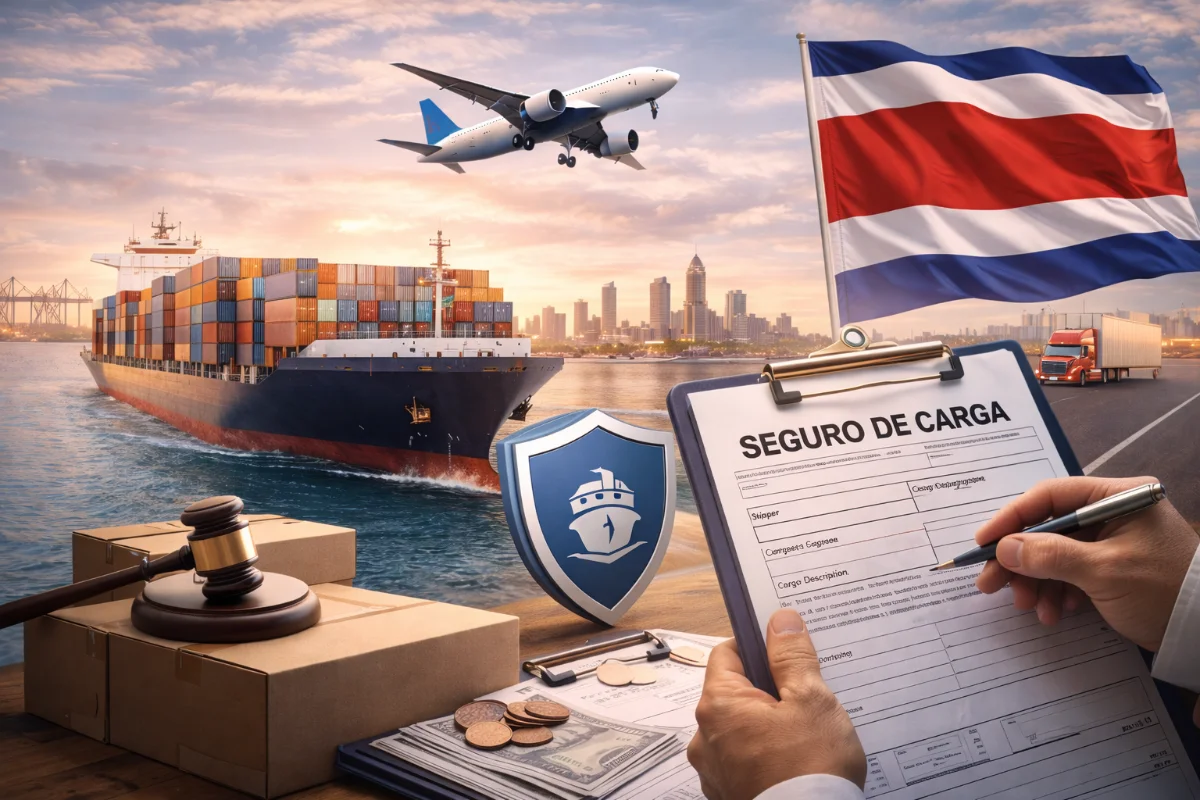
If the route is long, multimodal, or involves valuable products, it is advisable to review cargo insurance in Costa Rica and not leave coverage as a last-minute decision.
Disconnecting the shipment from the final destination
The company may analyze international freight well and fail in the last mile or local reception if it does not think through the complete process.
How to decide better: a practical matrix
You can make better decisions if you cross five variables:
1. Urgency
Can the cargo wait weeks or must it be available in days?
2. Volume
Is it a large, medium, or small shipment?
3. Product value
Does the freight cost represent little or a lot compared to the unit value?
4. Impact of delay
Does a delay affect only internal convenience or does it compromise sales and clients?
5. Operational complexity
Does the company have backup inventory, receiving capacity, document clarity, and control of the operation?
The clearer this matrix is, the better the decision will be.
The role of insurance and traceability in transportation
Choosing the mode of transportation also changes the risk profile. A compact, high-value air cargo is not the same as consolidated ocean cargo or a land route with multiple handling points. That is why transportation and insurance should be analyzed together.
In addition, traceability takes on a different value depending on the mode. In a planned ocean operation, the company can tolerate longer times if it has visibility and a clear schedule. In an air operation, speed loses meaning if no one knows exactly what stage the cargo is in. And in land transportation, local coordination can be decisive for meeting delivery windows.
When it is better to combine modes instead of choosing only one
In some cases, the best solution is not choosing a single mode, but designing a combination. For example:
- part of the order by air to cover urgency and the rest by ocean
- an international ocean leg with door-to-door land closure
- an air replenishment operation while stabilizing an ocean frequency
This hybrid approach is usually useful when the company wants to balance speed and cost without going to an extreme on one side. The key is for the combination to respond to business logic and not to improvisation.
Official resources to compare and plan better
In addition to your logistics quote, it is advisable to review technical and official sources that help you make more informed decisions:
- PROCOMER Exporter Guide, useful for companies strengthening their foreign trade processes.
- COMEX exports portal, to follow trends in goods exports from Costa Rica.
- COMEX imports portal, useful for supply context and analysis.
- DUA consultation and TICA system services, as an official customs reference.
- PROCOMER Exporter Route, if the company needs to better structure its international growth.
Frequently asked questions about international cargo in Costa Rica
Is ocean freight always cheaper?
It is usually more efficient per unit in large or planned cargo, but it will not always be the most convenient option if the company cannot wait or if the delay generates high costs.
Is air freight only for urgent shipments?
No. It can also be useful for valuable, sensitive, or strategic cargo. The important thing is that the cost makes sense compared to the impact of time.
Does land transportation apply only within Costa Rica?
Not necessarily. It can also be part of regional routes and, in any case, it is key to connecting ports, airports, warehouses, and final destinations.
How do I know whether FCL or LCL is right for me?
It will depend on volume, purchase frequency, and the degree of control you need over the cargo.
What should I do if I do not know which mode to choose?
The best starting point is a review of product, urgency, volume, cost, and commercial objective. From there, the best route is defined.
Conclusion
Choosing between ocean, air, and land transportation is not an isolated or purely operational decision. It is a business decision. It defines how much the company will pay, how quickly it will respond, what risks it will assume, and how it will sustain its inventory or customer service.
That is why the best transportation is not the one that sounds fastest or seems cheapest. It is the one that best fits the reality of the operation. When that decision is made with clear information, aligned with Incoterms, coverage, customs, and final delivery, transportation stops being a black box and becomes a strategic tool.
If your company needs to ground this decision with concrete data, you can review the main website of Care Shipping, explore the Costa Rica logistics glossary, or go directly to Contact Us to request a quote adapted to your operation.